
You’ve been tired so long you stopped bringing it up.
The workouts quit paying off. Mornings turned into a negotiation. Somewhere in the last couple of years the part of you that wanted things went quiet, and you got good at covering for it.
So you went in. Somebody ran a panel, said everything looked normal, maybe floated an antidepressant, and that was the visit. You left with a printout and no plan.
At Peak Performance Wellness & Aesthetics in Johnson City, we look past a single testosterone number to work out what’s actually driving the change. Women come to us from across the Tri-Cities for that, and some of them have already been told twice that nothing’s wrong.
or call 423-212-3703
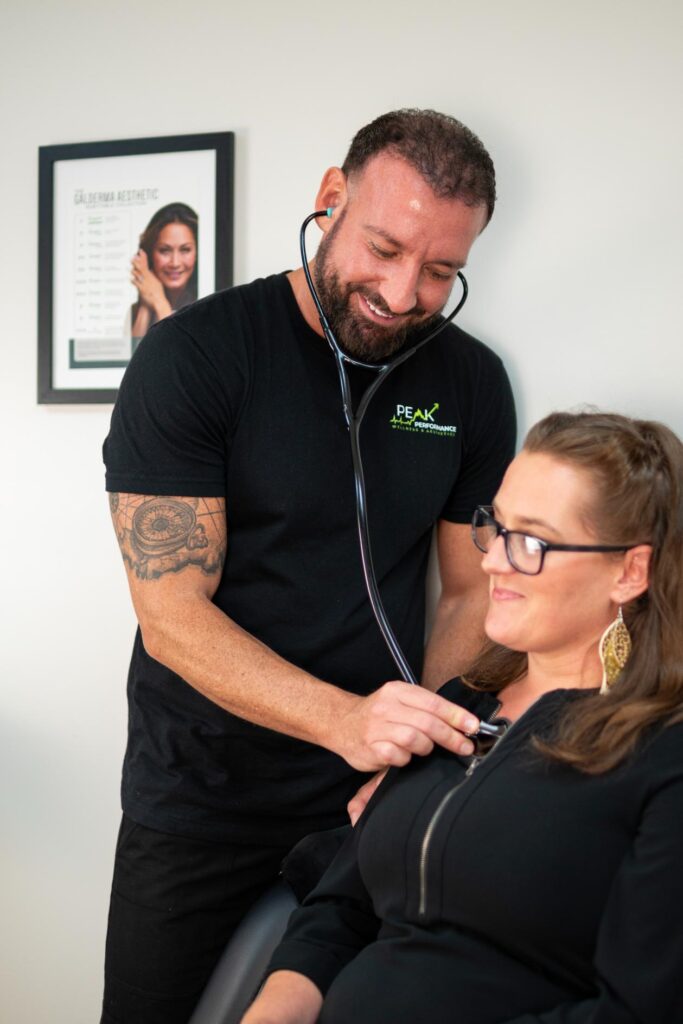
What you’re actually trying to get back
It isn’t a lab number. You want to wake up before the alarm, get something back from the gym, finish a sentence without chasing the word, and want your partner again instead of managing around it. Here is what working with us looks like.
- Testing that holds up in the female range, so you can stop wondering whether “normal” was ever the real answer.
- A dose sized for a woman’s body, so you can go after your drive and energy without worrying about looking or sounding different.
- Labs and check-ins at set points, so you can adjust early instead of finding out months later.
- A straight answer at your first visit, so you can stop paying for things that aren’t your problem.
- A six-month checkpoint, so you can know it’s working, or stop and try something else.
- One clinic for the whole picture, so you can sort out thyroid, iron, sleep, and estrogen in the same place.
Whether testosterone is the thing that gets you there is exactly what your first visit is for, and we’ll tell you either way.
Yes, women make testosterone
Women produce testosterone in the ovaries and adrenal glands throughout life, in much smaller amounts than men. It plays a real role in sexual desire, arousal, and satisfaction. Levels drift down with age, and they drop sharply if your ovaries are removed.
Women carry far less testosterone than men, and a female dose is roughly a tenth of a man’s. Hold onto that, because it answers most of what women are afraid of with this treatment.
Where the evidence is strongest
The most established use of testosterone in women is for hypoactive sexual desire disorder, or HSDD: persistent low desire that distresses you and isn’t better explained by something else. That’s the use international guidelines endorse, and it’s where the large trials found real results.
Most women who come to us have more than that going on. We lay out what the research does and doesn’t support further down, so you can decide with the real picture in front of you instead of a sales pitch.
Low testosterone in women: the symptoms women ask us about
These are the symptoms that bring women in asking about low testosterone. It isn’t a diagnostic checklist. There’s no blood test that confirms a female “low T” condition, and we get into why below.
- Desire that faded to nothing, and the distress of noticing it
- Arousal that takes longer, or orgasms that got harder to reach
- Fatigue that sleep doesn’t touch
- No drive, and a flat feeling about things you used to care about
- Strength training that stopped giving anything back
- Brain fog, losing words, reading the same paragraph three times
- A shorter fuse than you recognize in yourself
- Thinning pubic or body hair
Now the honest part. Every symptom on that list also belongs to low iron, thyroid disease, poor sleep, depression, and perimenopause. That’s not a reason to wave you off. It’s a reason to test properly before anybody writes a prescription, which is what we do.
Why your labs came back “normal”
This is the sentence we hear most in a first visit, and you deserve a real explanation for it.
A normal result doesn’t rule this in or out
Guidelines say no blood level reliably separates women with symptoms from women without them, and there’s no validated cutoff for low testosterone in women. So a “normal” result was never a complete answer to your question.
Many labs use a test designed around male levels
Standard immunoassays were designed around male-range concentrations, and clinical guidelines call them unreliable at the much lower levels found in women. We use lab testing appropriate for the much lower female range.
Your number still matters
It gives us a baseline, tells us if testosterone is unexpectedly high (which points somewhere else entirely), and once you’re on treatment it’s how we keep you inside the normal female range. It’s a safety check, not a target to chase.
The diagnosis comes from a real conversation about your symptoms, how much they’re costing you, and what else could be behind them.
or call 423-212-3703
What testosterone can and can’t do for you
Testosterone is involved in a lot of systems in the body. What treatment has been shown to do in women is narrower than that, and we’d rather you hear it from us than find out in month four.
Strong evidence, from large randomized trials
Sexual desire, arousal, orgasm, pleasure, and how you feel about yourself sexually, in postmenopausal women whose low desire is bothering them. This is the use backed by top-tier evidence and endorsed by international guidelines.
Not established in women
Energy, mood, mental clarity, motivation, body composition, and bone. Testosterone takes part in these systems, and many patients report real change, but large trials haven’t shown that treatment reliably delivers it. Results vary, so we watch for it with you rather than promise it up front.
So the strongest case for testosterone is a sex life you want back. The rest is a possibility we track together, and you’ll know which is which the whole way.
How we figure out whether this is your problem
Your first visit is a conversation. We want the history, the timeline, what changed and roughly when, what you’ve already tried, and which part of this is bothering you most.
Most patients then get a lab panel, and we test wider than testosterone:
- Total testosterone, using testing appropriate for the female range, plus SHBG so the number means something
- Estradiol and FSH, to see where you are in the menopause transition
- A full thyroid panel, because thyroid disease can look almost exactly like this
- Ferritin and CBC, since low iron causes these same symptoms and is very fixable
- Metabolic panel, lipids, and vitamin D for safety and a baseline
Sometimes the answer is testosterone. Sometimes it’s your thyroid, your ferritin, your sleep, or estrogen and progesterone instead. We’d rather find that than sell you the wrong thing and watch you feel the same in four months.
If your panel points toward broader changes, we widen the conversation to hormone optimization generally, including bioidentical hormone replacement therapy and where testosterone does or doesn’t fit into it.
Is testosterone worth asking about? A 4-question check
Not a diagnosis. Just a quick way to see whether a visit makes sense.
Has your interest in sex dropped, and does that bother you?
Are you in perimenopause or past menopause, or have you had your ovaries removed?
Have you been told your labs were normal but still don’t feel like yourself?
Is fatigue, brain fog, or low drive getting in the way of work or family?
Your answers point to a conversation worth having.
A free consultation is the simplest next step. We’ll go through your history, decide which labs make sense, and tell you whether testosterone, something else, or nothing at all is the right call.
or call 423-212-3703
Your treatment options: cream, injections, or pellets
We’ll tell you where the guidelines stand before we tell you what we offer, because those are two different things and they don’t always match.
Published guidelines prefer transdermal testosterone, meaning a cream or gel absorbed through the skin. They don’t recommend pellets or injections for women, mainly because those can push levels above the normal female range. In our experience, pellets and injections give the most accurate, predictable, and consistent delivery. We start low, go slow, and monitor you every step of the way, and we’ll walk you through exactly where each option differs from published recommendations before you choose.
Cream or gel, applied daily
A good starting point for most women. Topical is the most forgiving route: if something isn’t working, or a side effect turns up, we can change your dose this week or stop altogether.
Since there’s no FDA-approved female product in the US, this is either a compounded female-dose cream or an approved male product used at a reduced female dose. We’ll talk through which makes more sense for you.
Injections
A small dose on a set schedule, which some women prefer over a daily application. Because guidelines don’t prefer this route, we keep doses small, check labs more closely, and tell you plainly that it sits outside the guideline preference.
Pellets
Placed under the skin and released over several months, so there’s nothing to remember day to day. Once a pellet is in, the dose can’t be lowered until it wears off, so we dose from your labs and history and follow you closely.
If pellets are what you want, or you’d like estrogen and testosterone together, see our page on hormone pellet therapy for women.

We don’t use oral testosterone. It affects cholesterol in ways the other routes don’t.
What to expect, and when
Testosterone doesn’t work like estrogen. Estrogen can change how you feel in days. Testosterone takes longer, and knowing that up front is the difference between sticking with it and quitting in week three.
Weeks 1 to 4
Usually uneventful. Most women feel nothing yet, and that’s expected. If you feel worse or notice a side effect, call us rather than changing your dose yourself.
Weeks 3 to 6
We recheck your level and adjust your dose. We also ask about your skin and your hair.
Weeks 6 to 12
Where most women who respond start noticing something. Desire and responsiveness usually come first.
Around 3 months
Full effect on sexual symptoms for most women. If anything else has shifted, this is where you feel it.
Every 4 to 6 months
Labs and a symptom review once you’re steady.
6 months
Our checkpoint. If testosterone hasn’t made a real difference by then, we take you off it instead of continuing to bill you.
Side effects, without the soft pedal
At female doses, many women have few or no side effects, and most of the ones that do show up reverse. They’re dose dependent, which is the whole argument for starting low and watching you closely.
Usually reversible
- Acne or oilier skin
- More facial or body hair, usually mild
- More sweating, or a change in body odor
- Irritation where you apply a cream
These respond to lowering the dose, which is why we want to hear about them in week six and not at your next annual.
Worth taking seriously
Scalp thinning, a deeper voice, and clitoral enlargement are the ones that might not fully reverse. They show up with doses that push women above the normal female range, which is exactly what careful dosing and regular labs are there to prevent.
On hair, since it’s the first thing most women ask: shedding is also often caused by something else, like low ferritin or thyroid disease. That’s part of why we check both at baseline.
Tell us early. Almost all of this is manageable when we catch it at week six instead of month nine.
Who shouldn’t take testosterone
Testosterone isn’t right for you if you’re pregnant, trying to get pregnant, or breastfeeding. We also avoid it with active liver disease, a hormone-sensitive cancer like breast or uterine cancer, or significant cardiovascular disease.
Long-term safety data in women is limited. Past the length of the published trials, the research hasn’t been done, and we’d rather say so than pretend otherwise.
Cost, insurance, and the FDA question
The consultation is free. You can come in, talk the whole thing through, and find out whether testosterone is even worth pursuing for you before you’ve spent a dollar.
If you decide to move forward, here’s what women typically pay. Pharmacy prices vary, and we’ll go over your exact numbers before you start anything.
- Lab panel, for most patientsFrom $150
- Testosterone pellet$400
- Estrogen and testosterone pellet$450
- Topical testosterone or estrogen cream or patchAround $100
- Oral micronized progesterone, if you need itUsually under $50
Labs aren’t required to talk with us, and they aren’t part of any monthly medication price. Some women need additional labs based on their symptoms, and we’ll tell you why before we order them.
On the regulatory side, there’s no FDA-approved testosterone product for women in the United States. Prescribing it to women is off-label, meaning a medication approved for one use is prescribed for another. Off-label prescribing is legal and common across medicine, and international menopause and endocrine societies support it for women when the dose stays in the normal female range.
Practically, most insurance won’t cover testosterone prescribed to a woman, so plan on medication being cash-pay. It’s still worth asking your insurance what they cover for hormone replacement and labs.
Find out in one visit whether this is your answer
Bring your old labs if you have them. You’ll leave knowing what we think is going on and what it would cost to fix it.
or call 423-212-3703

Why women across the Tri-Cities come to Peak Performance
Peak Performance was started by Eddie Hughes, FNP-BC, a board-certified family nurse practitioner with more than fifteen years across emergency medicine, neurosurgery, and regenerative medicine. Care here is medically supervised, with oversight from our medical director, Bruce Boggs, MD.
Eddie started the practice because too much of medicine manages symptoms with a longer and longer prescription list while nobody goes looking for the cause. It’s the same reason a woman with six real symptoms walks out with an antidepressant and a copy of her normal labs.
For you, that means:
- Testing that’s accurate in the female range, not a panel designed around men
- A provider who’ll tell you when testosterone isn’t your answer
- Careful dosing and real follow-up, whichever route you choose
- A six-month checkpoint where we stop if it isn’t working
- Same-week appointments are often available
If testosterone turns out not to be the issue, we can look at perimenopause treatment, hot flash treatment, medical weight loss, or IV hydration therapy as part of the same plan. Men looking for their own care can see our low testosterone therapy for men.
Serving Johnson City and the surrounding area
We’re in Johnson City, an easy drive from Gray, Boones Creek, Jonesborough, and Piney Flats. Women also come to us from Kingsport, Bristol on both the Tennessee and Virginia sides, Blountville, Abingdon, Elizabethton, Erwin, Greeneville, and Mountain City, because they want a clinic that takes this conversation seriously.
Frequently asked questions
Do women really need testosterone?
Women make testosterone their whole lives, and it plays a real role in desire and sexual response. Whether you need supplemental testosterone is a separate question that depends on your symptoms, how much they’re costing you, and what the rest of your workup shows.
Will testosterone make me look or sound masculine?
At the doses women take, roughly a tenth of a man’s, masculinizing changes are uncommon. A deeper voice and clitoral enlargement show up with doses that push women well above the normal female range. Staying in range and checking labs is how we avoid that.
Will I lose my hair?
Scalp thinning is possible, and it’s one of the more common reasons women stop. It’s also often caused by low ferritin or thyroid disease rather than testosterone, which is why we check both at baseline. If you notice shedding, tell us right away so we can lower your dose or look for the real cause.
Is testosterone FDA approved for women?
No. There’s no FDA-approved testosterone product for women in the United States, so it’s prescribed off-label. That’s legal and common, and international guidelines support it when testosterone is kept in the normal female range.
How long before I feel anything?
A few women notice something around four weeks. More commonly it’s six to eight weeks, with the full effect on sexual symptoms around twelve. Results vary, and the first few weeks usually feel uneventful, so don’t read that as failure. If you feel worse instead of nothing, call us rather than adjusting your dose on your own.
Will testosterone help me lose weight?
We won’t tell you it will. Testosterone hasn’t been shown to produce weight loss or meaningful body composition change in women. If weight is your main concern, our medical weight loss program is the honest answer.
Is testosterone therapy the same as hormone pellet therapy?
Not quite. Testosterone therapy is the treatment, and a pellet is one way to deliver it, along with creams and injections. Our hormone pellet therapy for women page covers pellets specifically, including estrogen and testosterone pellets. This page covers whether testosterone makes sense for you at all and which route fits.
Which is better: cream, injections, or pellets?
Cream is a good starting point for most women, because the dose can change or stop at any point. In our experience, pellets and injections give the most consistent delivery, and some women would rather not apply something daily. Pellets can’t be adjusted once placed, so we dose them carefully from your labs.
Do I have to take estrogen too?
Not necessarily. Testosterone on its own doesn’t require endometrial protection. Whether you also need estrogen or progesterone depends on your symptoms and where you are in the transition, and that’s part of what your first visit sorts out.
Does insurance cover testosterone for women?
Usually not, since it’s off-label for women, so plan on medication being cash-pay. Some plans cover part of hormone-related lab work, so it’s worth asking. The consultation itself is free, so you can find out whether this is right for you before spending anything.
Can I do this if I’m still having periods?
The strongest evidence is in postmenopausal women, and we’ll tell you that directly. We do see women in perimenopause, and the conversation is about weighing a thinner evidence base against what you’re living with.
What if it doesn’t work?
Then we stop. Six months is our checkpoint. If testosterone hasn’t made a real difference by then, staying on it isn’t in your interest and we’ll say so.
Let’s find out what’s actually going on
You don’t have to keep managing around this, and you don’t have to accept “normal” as the final word on how you feel.
Come in, get tested properly, and find out whether testosterone is your answer or whether it’s something else. Either way, you’ll leave with a plan instead of a printout.
or call 423-212-3703
Sources
- Global Consensus Position Statement on the Use of Testosterone Therapy for Women (National Library of Medicine, PubMed Central)
- Testosterone Information (U.S. Food and Drug Administration)
This page is general information, not medical advice. Treatment decisions are made individually after an evaluation, and results vary.
