
Medically reviewed by Eddie Hughes, FNP-BC. Updated October 2026.
Your symptoms matter as much as your labs. If you’re still dealing with fatigue, brain fog, or stubborn weight after being told your thyroid is normal, a more complete evaluation can help find what a single test may have left unanswered.
At Peak Performance Wellness & Aesthetics in Johnson City, we look at the full thyroid panel, the nutrients your thyroid depends on, and the other hormones that overlap with it, so you can find out what is actually behind how you feel.
Or call 423-212-3703
The symptoms we hear most often
People come to us in Johnson City describing some version of the same thing:
- Tired in a way that sleep doesn’t fix
- Brain fog, or reading the same email three times
- Weight that won’t move no matter what they change
- Thinning hair and dry skin
- Cold hands and feet when nobody else in the room is cold
- Low mood, low motivation, low drive
Often they’ve already had bloodwork and been told everything looks fine. Sometimes they’re already on thyroid medication and still feel this way.
If that’s you, you’re not alone and you’re not imagining it. Symptoms like these are real, and they’re worth investigating properly.
Is it your thyroid? A 4-question check
Answer four quick questions and get a suggested first step and what to bring to your visit. Nothing you choose leaves this page.
Question 1 of 4
What bothers you most right now?
Why “normal” and “optimal” aren’t the same thing
Thyroid screening usually starts with TSH, and for good reason. It’s a sensitive first-line test that catches most thyroid disease, and it’s the right place to begin.
The limitation is in how the reference range is built. Lab ranges come from average values across a large population, and that population includes people whose own thyroid function was never evaluated. A wide range is very good at flagging disease. It’s less useful for telling one person whether they’re where they personally feel best.
The short version
Standard reference ranges are designed to detect disease. They were never designed to tell you whether you feel well.
So a result can sit inside the range and still leave real questions open, especially when symptoms persist. That’s the gap a fuller evaluation is meant to close.
How thyroid hormone actually works
Your thyroid produces mostly T4, roughly 93% of its output, and only a small amount of T3.
Storage form
93%
T4, most of what your thyroid makes
Active form
T3
What your cells use for energy, temperature, and metabolism
TSH and T4 mostly describe production. Free T3 shows what made it through conversion.
T4 is the storage form. It has to be converted into T3, the active form, before your cells can use it for energy, temperature, and metabolism.
That matters because TSH and T4 mostly describe production. They say less about conversion. If your gland is producing normally but your body isn’t converting efficiently, the top of the chain can look fine while you still feel the effects further down.
This is why we measure the active hormone directly rather than inferring it.
Or call 423-212-3703
What our comprehensive thyroid evaluation includes
Which tests we run depends on your history and symptoms. A typical comprehensive workup looks at three layers:
Core thyroid panel
| Test | What it helps us understand |
|---|---|
| TSH | The pituitary’s signal to the thyroid, and the standard first-line screen |
| Total T4 | How much storage hormone your thyroid is putting out |
| Free T3 | The active hormone your cells actually use |
| Reverse T3 | An inactive form the body can make more of during stress, illness, or nutrient shortfalls |
| TPO antibodies | Autoimmune activity, which can be present before hormone levels change |
| Thyroglobulin antibodies | A second autoimmune marker, usually run alongside TPO |
Nutrient cofactors
Your body needs specific nutrients to produce and convert thyroid hormone. We commonly check ferritin, vitamin D, B12, zinc, and selenium so that a correctable shortfall doesn’t get missed.
Metabolic and inflammatory markers
Where it’s relevant to your symptoms, we may add fasting insulin, HbA1c, and inflammatory markers, since metabolic health and thyroid function influence each other.
Hashimoto’s thyroiditis, an autoimmune condition, is the most common cause of hypothyroidism in the United States. Because antibodies can be elevated before hormone levels shift, checking them can change what we watch for and when.
Or call 423-212-3703
Standard range versus where we aim
Most labs report a single wide reference range. We also look at where inside that range you tend to feel your best, and we talk through those targets with you directly.
Eddie pays the most attention to conversion: whether your T4 is turning into enough active T3. His Free T3 goal is 3.5 or higher, though where you need to be honestly depends on how you feel.
Free T3, pg/mL
A typical lab range, and the part of it we aim for
Illustration only. Your lab’s own range may differ.
| Test | Typical lab reference range | What we aim for |
|---|---|---|
| TSH | 0.4 to 4.0 mIU/L | Within the normal range |
| Total T4 | About 5 to 12 mcg/dL | Within the normal range |
| Free T3 | 2.3 to 4.2 pg/mL | 3.5 or higher, guided by how you feel |
| Reverse T3 | 8 to 25 ng/dL | Read alongside your Free T3, not on its own |
With Reverse T3, the number by itself matters less than how it compares with your Free T3, so we look at the two together.
These targets are a starting point for a conversation, not a diagnosis. Where you personally need to be depends on your symptoms, your history, and how you respond to treatment.
Reference ranges vary between labs, so your report may show slightly different numbers than the ones above.
Patterns we look for
Numbers matter less than the pattern they form. These are some of the pictures we see most often, and each one points somewhere different.
01
Normal TSH, low Free T3
Production looks adequate but the active hormone is low, which can point toward a conversion issue rather than a gland issue.
02
Elevated Reverse T3
Reverse T3 is an inactive form of the hormone. Higher levels can accompany chronic stress, illness, inflammation, or nutrient deficiencies, and may be a clue worth following alongside the rest of the panel.
03
Positive antibodies, normal hormones
Autoimmune activity can show up before thyroid hormone levels change. Finding it early changes the monitoring plan.
04
On treatment, still symptomatic
Labs improved but symptoms didn’t. This deserves a fresh look at the full panel rather than an assumption that the thyroid question is settled.
05
The thyroid isn’t the answer
Sometimes a full workup points to iron or B12 deficiency, sleep, a medication effect, perimenopause, or a metabolic driver instead. Ruling the thyroid out is a real result, and it saves you from treating the wrong thing.
Already on levothyroxine and still not feeling well?
This is one of the most common reasons people come to see us, and it’s worth its own conversation.
Levothyroxine is T4 only. For many people that’s all they need. For others, symptoms persist even after TSH looks good on paper.
When that happens, we look at the full panel rather than the single number, and we consider what else could be contributing: nutrient status, absorption and timing, inflammation, other hormones, or how well you’re converting T4 to T3.
Depending on what we find, your provider may discuss adjusting your current therapy, adding T3 (liothyronine), or considering desiccated thyroid extract. Some patients report feeling better on a regimen that includes T3, though it isn’t right for everyone, and desiccated thyroid extract is not FDA approved. Any change is an individual clinical decision made with you.
Or call 423-212-3703
We’re glad to work alongside your primary care provider
Coming to us doesn’t mean leaving your current doctor. Plenty of our thyroid patients keep their PCP and use us for the deeper workup and ongoing optimization.
We’re happy to share results and coordinate care so everyone is working from the same information.
What to expect
- 1
Your first visit
We go through your history, your symptoms, any prior labs you have, and what you’ve already tried. Then we decide together which tests make sense for you.
- 2
Your results conversation
You get an actual conversation about what the panel shows, what it rules out, and what it points toward. Not a portal message saying “normal.”
- 3
Your plan, then follow-up
Depending on findings, a plan may include nutrient repletion, lifestyle and metabolic support, thyroid medication, or a combination. We recheck labs about 6 to 8 weeks after a change and adjust based on both your numbers and how you’re actually feeling.
Most people should expect this to take time rather than days. Thyroid changes are typically gradual, and it can be several weeks before symptoms begin to shift after a change.
Or call 423-212-3703
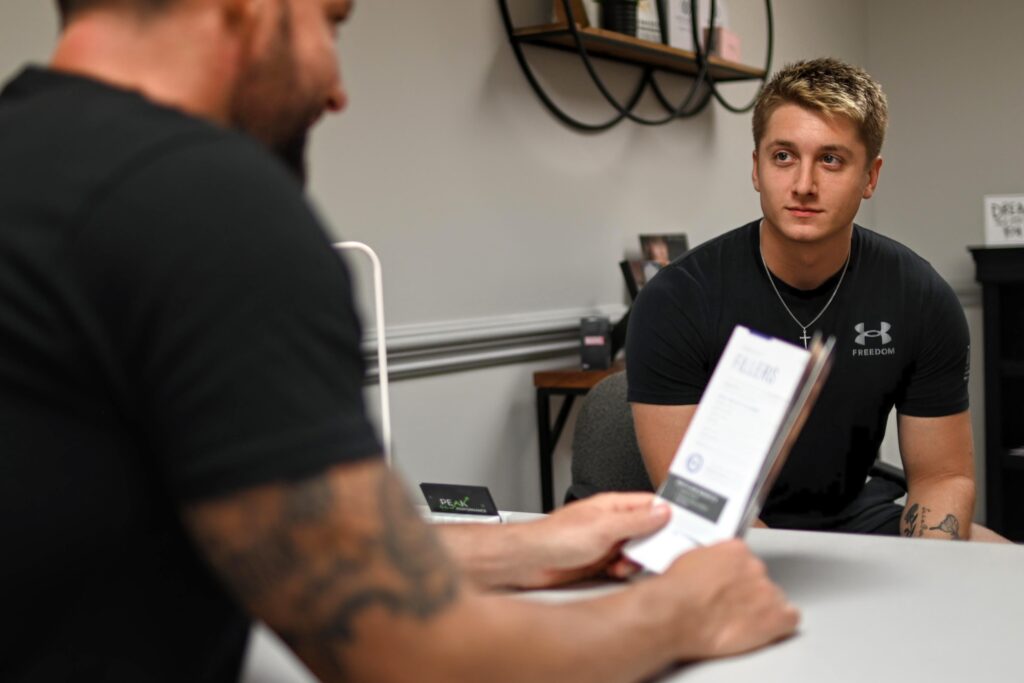
Risks and monitoring
Thyroid hormone is a real medication and deserves real oversight. Too much can cause symptoms of its own, including rapid or irregular heartbeat, anxiety, tremor, trouble sleeping, and over time effects on bone density.
That’s why treatment here comes with scheduled follow-up labs and dose adjustments rather than a prescription and a wave goodbye. Thyroid hormone is not a weight loss treatment and shouldn’t be used as one in people with normal thyroid function.
If you’re pregnant, planning pregnancy, or have a heart condition, tell us. It changes how we approach both testing and treatment.
Is it your thyroid, or something else?
Thyroid symptoms overlap heavily with other conditions, which is exactly why we evaluate rather than assume.
| Symptom | Thyroid-related possibilities | Other factors worth evaluating |
|---|---|---|
| Fatigue and brain fog | Hypothyroidism or poor T4 to T3 conversion | Iron or B12 deficiency, hormonal balance, sleep quality, medications, blood sugar, depression |
| Weight changes | Thyroid dysfunction can affect metabolic rate | Insulin resistance, nutrition and activity, medications, perimenopause, and overall hormonal balance |
| Hair and skin changes | Can occur with hypothyroidism | Iron, zinc, or protein shortfalls, dermatologic conditions, hormonal shifts |
| Cold intolerance | Commonly associated with hypothyroidism | Anemia, low body mass, circulation, other medical causes |
| Low mood and low drive | Thyroid hormone affects mood and energy | Testosterone or estrogen changes, vitamin D, sleep, stress, mental health |
A good evaluation tells you which column your answer is actually in.
When the thyroid is only part of the picture
Sometimes the workup shows the thyroid is contributing but isn’t the whole story. Thyroid hormone, sex hormones, and nutrient status all influence each other, and treating one while ignoring the others tends to give partial results.
When it’s clinically appropriate, we can evaluate these together and build one plan instead of three. That may include hormone optimization, medical weight loss, or targeted nutrient support depending on what your results show.
If brain fog is your main complaint, we also have a dedicated page on brain fog treatment in Johnson City.
Or call 423-212-3703
Meet your care team
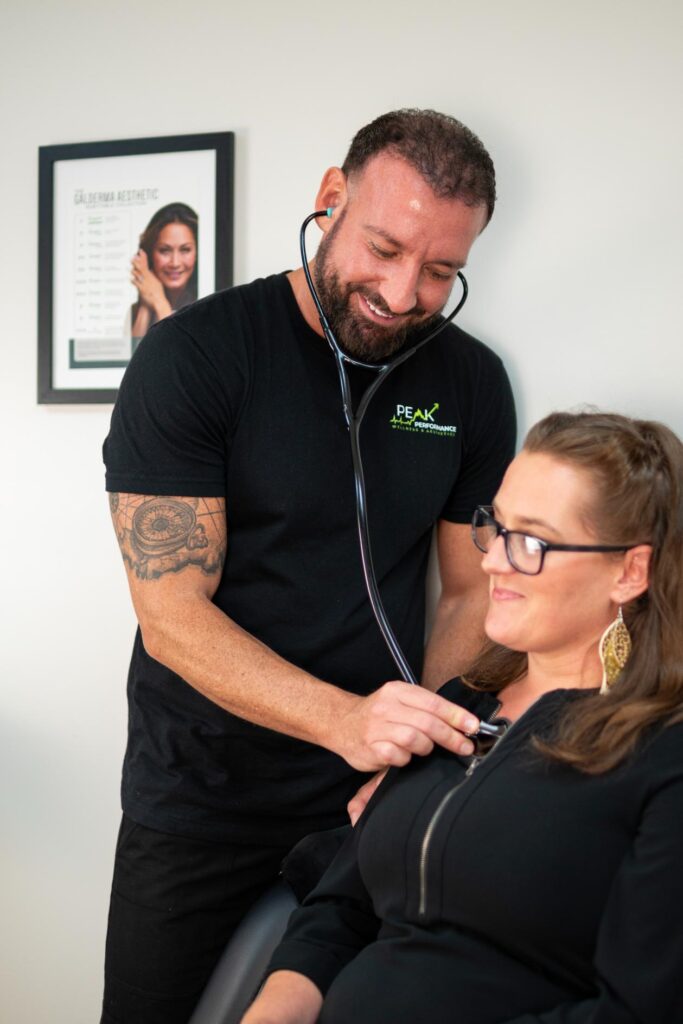
Peak Performance Wellness & Aesthetics is led by Eddie Hughes, FNP-BC, with more than 15 years in healthcare spanning emergency medicine, neurosurgery, and regenerative medicine, and supported by Dr. Bruce Boggs, MD, who brings years of emergency medicine and primary care experience.
Our approach is high-tech and high-touch: advanced diagnostics, real time with your provider, and plans built around your history rather than a template, so you leave knowing what your results mean and what comes next. Read more about our team.
5.0 on Google, 115+ reviews
★★★★★
“Eddie has helped me more ways than my other physicians have in years! He takes the time to know his clients and deliver personalized care.”
★★★★★
“I always feel heard and expertly cared for. Eddie goes above and beyond to dig into the layers of my concerns to help me achieve my goals.”
★★★★★
“I drive all the way from Knoxville just to visit this office, and it was absolutely worth it. His knowledge of wellness is second to none.”
Thyroid care for Johnson City and the Tri-Cities
We’re on Bristol Highway in Johnson City, an easy drive from Kingsport, Bristol, Elizabethton, Jonesborough, and the ETSU campus.
Visit us
Peak Performance Wellness & Aesthetics
Johnson City, Tennessee
423-212-3703
Or call 423-212-3703
Frequently asked questions
Can I still have thyroid symptoms if my TSH is normal?
It’s possible. Symptoms like fatigue, brain fog, and weight changes aren’t specific to thyroid disease, so a normal TSH doesn’t automatically mean the thyroid is the answer or that it isn’t. Depending on your history, symptoms, medications, and prior results, your provider may recommend additional thyroid testing or look at other possible causes.
What tests are in a comprehensive thyroid panel?
A comprehensive panel at Peak typically includes TSH, Total T4, Free T3, Reverse T3, and thyroid antibodies (TPO and thyroglobulin). Many evaluations also check nutrient cofactors such as ferritin, vitamin D, B12, zinc, and selenium. Routine screening often uses TSH alone, which is appropriate as a first step but gives a narrower picture.
I’m on levothyroxine and still don’t feel well. What now?
Persistent symptoms on treatment are worth re-evaluating rather than accepting. We look at the complete panel, review dosing and how you take it, and check for other contributors like low ferritin or vitamin D. Any change to your medication is an individual decision made by your provider with you.
What is Reverse T3 and does it matter?
Reverse T3 is an inactive form of thyroid hormone that the body can produce more of during stress, illness, or nutrient deficiency. It isn’t part of most standard panels, and its clinical significance is still debated. We include it as one piece of a fuller picture, read alongside your Free T3, rather than as a standalone diagnosis.
Should I be tested for thyroid antibodies if my hormone levels are normal?
It can be worth discussing. Thyroid antibodies can be elevated before hormone levels change, so testing them may identify autoimmune activity earlier and change how your thyroid is monitored over time.
Do I need an endocrinologist for my thyroid?
Not always. Many people with hypothyroidism or Hashimoto’s are managed outside an endocrinology office. If your evaluation turns up something that needs a specialist, such as a thyroid nodule or an overactive thyroid, we’ll tell you and help you get to the right endocrinologist in the Tri-Cities.
How long before I feel better?
It depends on the cause and the plan. Thyroid changes tend to be gradual, and it may be several weeks before symptoms begin to shift after a medication or nutrient change. We retest and adjust rather than expecting the first plan to be the final one.
Do I have to stop seeing my regular doctor?
No. Many of our thyroid patients keep their primary care provider and see us for comprehensive testing and ongoing optimization. We’re glad to share results and coordinate.
Do you take insurance?
We do not bill insurance plans, and we are happy to accept HSA and FSA cards. Some insurance companies will reimburse you for care provided here or let it count toward your deductible. Coverage varies by plan and by which parts of the evaluation you use, so we encourage insured patients to contact their insurance provider before scheduling.
Where are you located?
Peak Performance Wellness & Aesthetics is in Johnson City, serving Johnson City, Kingsport, Bristol, Elizabethton, and the greater Tri-Cities. Call 423-212-3703.
Find out what your labs have been missing
Stop settling for “normal” labs when you feel far from normal. Book a comprehensive thyroid evaluation, so you leave with a full picture, a plan, and a date to recheck.
Or call 423-212-3703
This page is for educational purposes and is not a substitute for individualized medical advice. Thyroid conditions should be evaluated and managed by a licensed provider based on your labs, symptoms, and history.
Medically reviewed by Eddie Hughes, FNP-BC. Last updated October 2026.
